My first experience of health and wellness wasn't in a boardroom or a product development meeting.
It was on the gym floor.
I started my career as a personal trainer, working in health-club environments with people who wanted to become fitter, healthier and more confident.
That experience has stayed with me throughout 26 years in the industry.
It taught me that health isn't an abstract concept.
People don't buy health products because they want an impressive ingredient list.
They buy them because they want to feel better.
They want more energy.
They want to support their health.
They want to perform better.
They want to change something about their lives.
That perspective has shaped everything I've done since.
From the gym floor to the product industry
After my early career in personal training and health clubs, I moved into the health and wellness product industry.
For the last 15 years, I've worked across products, ingredients, brands, customers and consumers.
I've seen the industry evolve enormously.
I've seen new ingredients emerge, new categories develop and consumer interest in health grow dramatically.
I've also seen something that has increasingly frustrated me.
The gap between what a product appears to offer and what it actually delivers.
When marketing becomes more important than the formulation
The supplement industry is incredibly competitive.
Walk into the market today and you'll find products with impressive labels, long ingredient lists and increasingly sophisticated marketing.
But a long ingredient list doesn't necessarily mean a good formulation.
And a claim about an ingredient doesn't necessarily tell a consumer how much of that ingredient they're actually getting.
I've seen products where an ingredient features prominently in the marketing, while the actual level included is relatively small.
The label may technically support the claim.
But I don't believe that's necessarily what the consumer thinks they're buying.
That distinction has bothered me for a long time.
If an ingredient is important enough to build part of your marketing story around, I believe it should be there in a meaningful amount.
The product should deliver what the consumer thinks they're buying.
That sounds obvious.
But after 15 years in the product industry, I don't think it happens often enough.
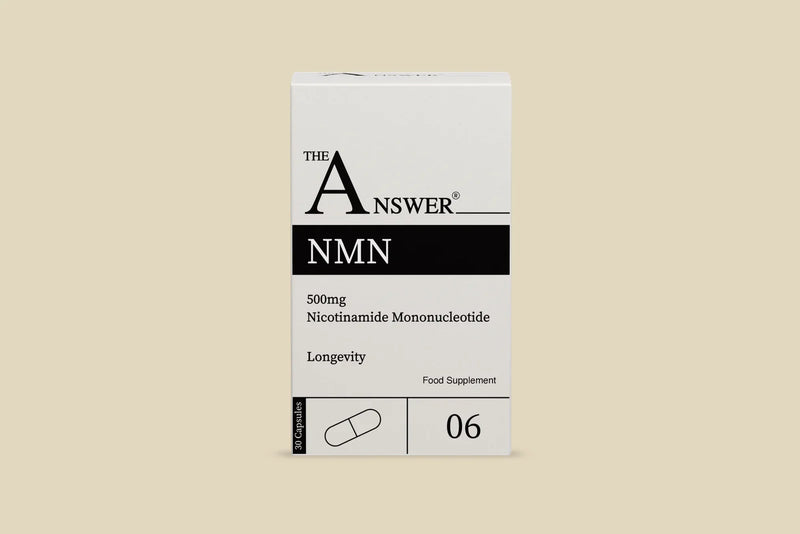
The Answer
That belief became the foundation for The Answer.
I wanted to create a brand with products that actually deliver.
Not products designed around the minimum amount of an ingredient needed to support a marketing message.
Not formulations built around an impressive-looking label.
Not products where clever branding does more work than the ingredients themselves.
The Answer is built around four principles:
Quality.
Craftsmanship.
Value.
Trust.
The name reflects the simple question consumers are constantly asking:
What is the answer?
What should I take?
Which ingredients matter?
What formulation makes sense?
Which product can I trust?
I wanted The Answer to provide products where the answer wasn't hidden behind clever marketing.
It should be in the formulation.
Formulation before marketing
Our formulations are steeped in research, but our philosophy is deliberately simple.
We don't want complexity for the sake of complexity.
We want to understand the purpose of a product, identify the ingredients that can genuinely contribute to that purpose and formulate them properly.
That means looking beyond whether an ingredient can simply be included on a label.
We ask whether it belongs there.
We ask whether the level is meaningful.
We ask whether the overall formulation makes sense.
And we ask whether we'd be comfortable putting the product in front of someone who understands the category and is going to scrutinise it.
For me, that's the difference between creating a product and creating a formulation.
A product can be designed to sell.
A formulation should be designed to deliver.
The problem with cost engineering
One of my frustrations with the industry is how heavily some products have become cost engineered.
There is nothing wrong with running an efficient business.
Businesses need to make money.
Manufacturing costs matter.
Margins matter.
But there is a point where reducing the cost of a formulation starts to compromise the reason the product exists in the first place.
If you keep taking cost out of a product, eventually there may be very little left that can deliver a meaningful outcome.
At that point, marketing has to do more of the work.
That's the part I don't want.
I'd rather build a product where the value is in what is actually inside it.
Building for a more considered consumer
The consumer has changed considerably during my career.
People are researching ingredients.
They're comparing products.
They're reading reviews.
They're asking questions.
They're increasingly health-conscious and willing to make considered purchases rather than simply buying the cheapest option.
That's the consumer I want The Answer to serve.
Someone who cares about their health.
Someone who wants to understand what they're buying.
Someone who is prepared to invest in quality.
And, importantly, someone looking for a brand they can stay with.
I don't want The Answer to be a brand someone buys once because they saw an advert.
I want to build a brand people grow with.
Why design matters
One thing I've been particularly proud of since launching The Answer is the response from customers.
Some of the feedback we've received through Amazon has been about the products themselves, but a surprising amount has been about how they look and feel.
People comment on the packaging.
The design.
The overall experience.
That matters to me.
Not because beautiful design makes a product effective.
It doesn't.
But because the experience should reflect the standard behind the product.
The formulation needs to deliver.
The packaging needs to communicate quality.
The experience needs to feel considered.
Everything should tell the same story.
That is part of the reason I want The Answer to occupy a different space in wellness.
I don't want it to feel like a conventional supplement brand.
I want it to sit where science, quality, craftsmanship and design meet.
Our products
We've deliberately built the range around products with a clear purpose rather than trying to create an enormous catalogue from day one.
Our magnesium formulation, built around Magtein®, and our organic mushroom powders both reflect the same philosophy.
Start with the objective.
Understand the research.
Choose the ingredients carefully.
Formulate properly.
Then communicate clearly.
That approach won't always be the easiest commercially.
But I believe it creates a stronger brand in the long term.
The ambition
My ambition for The Answer is much bigger than creating another successful supplement company.
I want to build an international health and wellness brand with a distinct identity.
A brand that can occupy the creative space where science, quality, design and lifestyle meet.
The brands I admire most treat formulation, design, experience and brand identity as one connected idea.
I want The Answer to have that same sense of trust, consistency and craftsmanship.
I want someone to recognise a product as The Answer before they even read the name.
And I want them to know what that means.
Quality.
Thoughtful formulation.
Considered design.
And, above all, trust.
Why I'm building it now
Becoming a father has changed the reason behind all of this.
For much of my career, health was an industry I worked in.
Now it's much more personal.
When my daughter arrived, I was forced to look honestly at my own health.
I'd slipped back into old habits. I was carrying weight again, eating and drinking when stressed and not living in a way that reflected the future I wanted.
I changed that.
I overhauled my lifestyle, stopped drinking alcohol and lost more than three stone.
The biggest change wasn't my weight.
It was getting my energy back.
Then I lost my father.
He was the same age when he had me as I was when I had my daughter.
That experience has made me think about longevity in a completely different way.
It's not simply about adding years.
It's about being healthy enough to experience those years.
It's about being present.
It's about having energy.
It's about being there for the people you love.
And that's ultimately what I want The Answer to contribute to.
Not health for health's sake.
Health for life.
A better standard
I don't believe consumers should need to be experts in formulation to know whether they're getting a good product.
If you tell someone an ingredient is important, give them a meaningful amount.
If you make a promise, make sure the formulation can stand behind it.
If you're asking someone to trust you with their health, earn that trust.
And if you want someone to stay with your brand for years, give them a reason to.
That's the standard I want The Answer to set.
The business is still young.
There is a huge amount more to build.
But the principle is simple.
Make products that deliver.
Build them properly.
Price them fairly.
Communicate honestly.
And give consumers a brand they can trust for the long term.
That's The Answer.